
USA Hockey’s Golden Sweep: Lessons in “Feeding the Soil” for Instant Team Cohesion
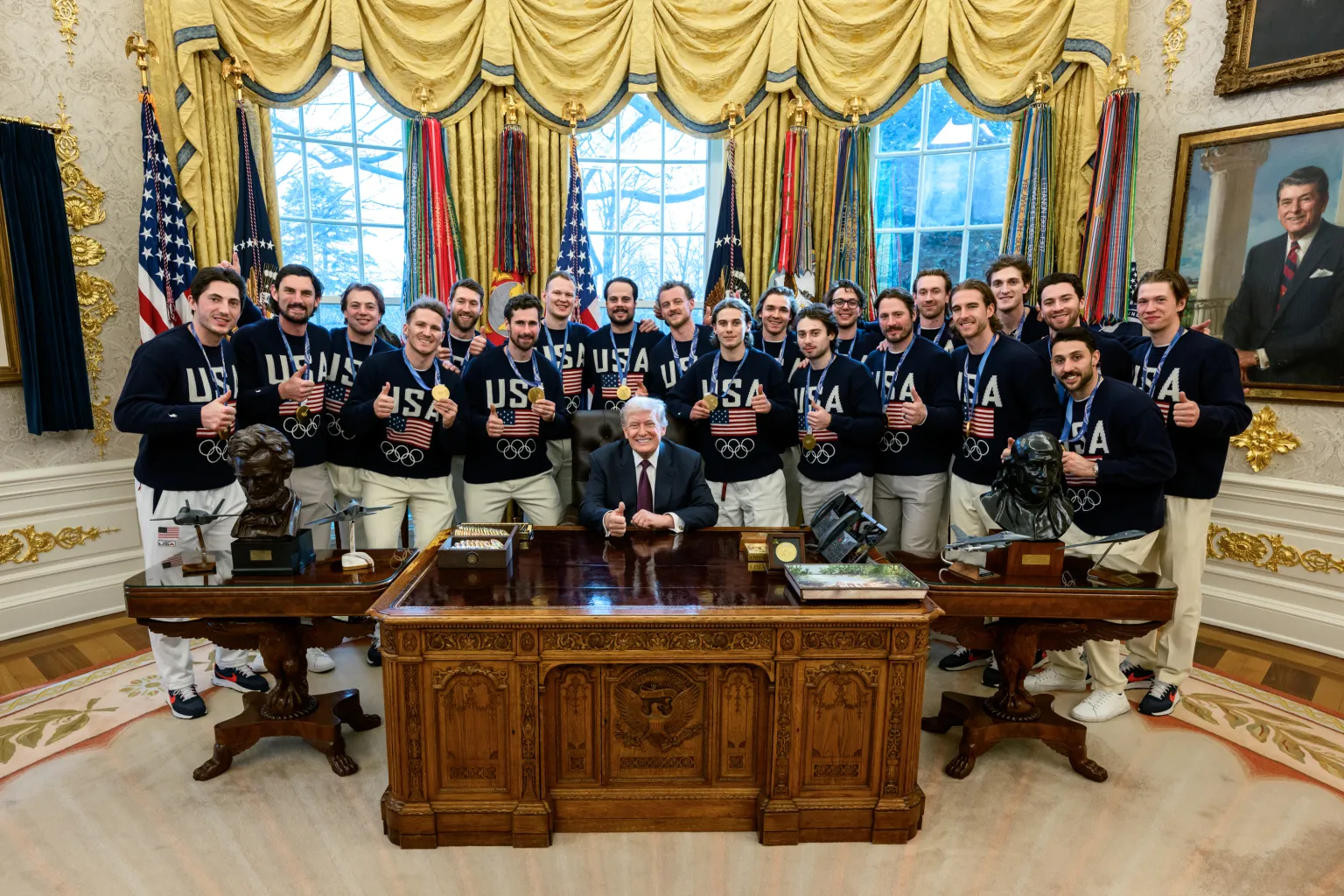
Photo above: USA Men’s Hockey Team in the Oval Office with President Trump (Feb 24, 2026)
In the 2026 Milano Cortina Winter Olympics, both the USA men’s and women’s hockey teams defeated Canada in dramatic 2-1 overtime victories to win gold. The men’s team captured America’s first Olympic men’s hockey gold medal in 46 years (exactly 46 years after the 1980 “Miracle on Ice”), while the women’s team secured their third Olympic gold. This double-gold sweep by USA Hockey demonstrated the power of “feeding the soil” for instant team cohesion from talented players across different professional leagues.
The Humaculture® Topological Model principle of “feed the soil, not the plant” was on full display. The “plants” are the elite athletes with outstanding personal characteristics, skills, training, and experience. The “soil” consists of the organizational processes such as Cultural Nurturing and Performance Nurturing, along with structures that support Merit-Based Talent Cultivation and clear roles. When this “Organizational Soil” is rapidly enriched, exceptional Created Value emerges even under tight timelines.
The Challenge of Rapid Team Assembly
Olympic hockey requires top players from multiple NHL teams (men) and PWHL teams (women) to form a unified group in just weeks. Each athlete arrives with their own playing style, ego, and club background. Success hinges on quickly “feeding the soil” for instant team cohesion so that Talent Diversity and Collaboration can produce winning results despite the intense pressure and short preparation time.
Men’s Team: Resilience While “Feeding the Soil” for Instant Team Cohesion
In the men’s gold medal game, forward Jack Hughes took a high stick to the mouth from Canada’s Sam Bennett in the third period, knocking out parts of his two front teeth. Rather than leaving the game, he drew the penalty, quickly composed himself, and returned to the ice. In overtime, Hughes scored the golden goal to secure the victory.
Above video: Jack Hughes’ Golden Goal
Ironically, the golden goal came from Jack Hughes, who shares the name of the player who was the final cut from the 1980 “Miracle on Ice” team exactly 46 years earlier.
Goaltender Connor Hellebuyck delivered a dominant performance with 41 saves in the gold medal game alone, including massive third-period stops that kept the United States in position to win. His focus and positioning exemplified strong Performance Nurturing, through clear role clarity and mental preparation that enabled peak Capacity in support of the team.
Above video: Connor Hellebuyck’s Unbelievable Highlight Reel
The leadership of the men’s team, under Coach Mike Sullivan and GM Bill Guerin, first designed the roles and processes around character, high-autonomy, and accountability, what Coach Mike Sullivan later called a team of “whiskey drinkers” who embraced unglamorous roles without ego. They then deliberately “fed the soil” by providing clear role descriptions and expectations, encouraging greater player autonomy in on-ice decisions, and rewarding unselfish team cooperation through a culture of accountability and “next shift” focus. This differed markedly from past Olympic teams that relied more heavily on raw talent alone.
Women’s Team: Leadership and Excellence While “Feeding the Soil” for Instant Team Cohesion
The women’s team cultivated a distinctly different “Organizational Soil.” As a more established national program under Coach John Wroblewski, leadership first designed the system with clear roles emphasizing positional versatility and a shared aggressive mindset (where strong offense served as the best defense). They then selected players who would excel within that designed structure and created processes that made every role genuinely important. This intentional enrichment of the “Organizational Soil” built rapid trust, communication, and collective accountability despite the short Olympic preparation period.
Above video: U.S. women’s hockey team receives gold medal
Goaltender Aerin Frankel delivered one of the most dominant performances in Olympic women’s hockey history, allowing only two goals across all games while recording three shutouts. Her consistency provided the rock-solid foundation for the team’s success.
Practical Lessons from “Feeding the Soil” for Instant Team Cohesion
Both USA Hockey teams – two different organizations representing the same USA – prove that prioritizing Merit-Based Talent Cultivation and rapidly “feeding the soil” for instant team cohesion leads to outstanding outcomes. Both teams followed the same core approach: first design the roles and processes, then select players who would thrive within that system. The men’s team uniquely designed theirs around character, high autonomy, and accountability to succeed despite players coming from a high-ego NHL environment. The women’s team designed theirs around positional versatility and a shared aggressive mindset to create a cohesive national program. These unique designs created the enriched “Organizational Soil” that enabled elite talent to thrive as a cohesive unit — far beyond what raw skills and experience alone could have achieved.
This approach delivers the Three Promises: Effectual results through victory, Emotional resonance through shared pride, and Economic value through enhanced reputation and talent development.
Leaders in any field can apply these same principles: focus first on strengthening processes and structures (such as clear roles, autonomy, communication, and team accountability) rather than trying to force outcomes from talent alone.
This article is part of our Team Sports series exploring how leaders “feed the soil” for rapid team success. Previously: From Underdog to Unbeaten Champions – the Indiana Hoosiers story.
Contact: Steve Cyboran at Steve.Cyboran@Humaculture.com, Wes Rogers at Wes.Rogers@Humaculture.com, or Caroline Cyboran at caroline.cyboran@humaculture.com
Website: humaculture.com
LinkedIn: humaculture-inc


